

Inherited Property Cash Offer Process: A Clear Guide
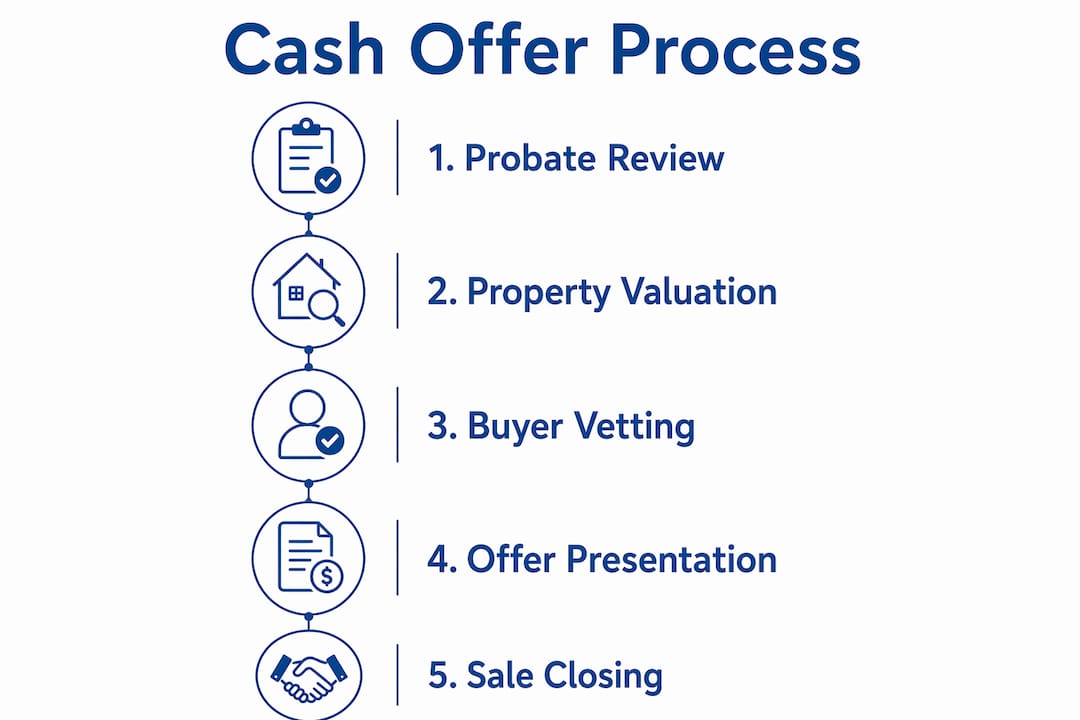
Selling an inherited property for cash is one of the fastest, most straightforward ways to convert a home you’ve inherited into liquid funds, often closing within a few weeks without repairs, agent commissions, or months of uncertainty. The inherited property cash offer process works like this: you verify ownership, gather key documents, request offers from cash buyers, vet those buyers carefully, and close once you’ve selected the best terms. Along the way, two legal realities shape your decisions. First, probate and creditor claim windows can affect when you’re legally free to sell. Second, the IRS’s stepped-up basis rule often reduces or eliminates capital gains tax when you sell soon after inheriting.
Here’s what the process looks like at a glance:
- Verify ownership through the will, deed, and probate court if required
- Gather documents including the death certificate, deed, and any existing mortgage information
- Assess the property’s condition honestly, since cash buyers purchase as-is
- Request offers from multiple cash buyers to create competition
- Vet each buyer for proof of funds, reputation, and clear terms
- Understand your tax position using the stepped-up basis before you accept
- Close with a title company or real estate attorney handling the paperwork
Traditional home sales through a real estate agent typically take several months or longer. A cash sale compresses that timeline dramatically, which matters when you’re managing an estate, splitting proceeds among heirs, or simply ready to move on.
Table of Contents
- How to get a cash offer on inherited property, step by step
- Why selling inherited property as-is for cash works in your favor
- Legal and tax considerations you need to understand before selling
- How to verify and choose a trustworthy cash buyer
- Cash sale vs. traditional sale: weighing your options
- Can you sell inherited property?
- Sell Dave Your House makes the cash offer process simple for Detroit-area heirs
- Key Takeaways
- FAQ
How to get a cash offer on inherited property, step by step
The process of selling an inherited house for cash follows a clear sequence. Skipping steps, especially early ones, creates legal and financial problems later.
-
Obtain the death certificate. You’ll need certified copies for nearly every transaction related to the estate, from transferring the deed to opening an estate bank account.
-
Locate and review the will. The will names the executor and identifies who inherits the property. If there’s no will, state intestacy laws determine ownership, and a probate court appoints an administrator.
-
Open probate if required. Most states require probate before an heir can legally sell inherited real estate. Some states offer simplified procedures for smaller estates, so check your state’s specific rules.
-
Confirm your legal authority to sell. The executor or administrator must have letters testamentary or letters of administration issued by the probate court before signing any sales contract.
-
Assess the property’s condition. Walk through the home and note major issues. Cash buyers purchase as-is, so you don’t need to fix anything, but knowing the condition helps you evaluate whether an offer is fair.
-
Request offers from multiple cash buyers. Contact at least three to five buyers. More offers create leverage and give you a realistic sense of market value for the property in its current state. You can review inherited home selling options to understand how cash offers compare to other methods.
-
Review each offer carefully. Look beyond the headline price. Check the proposed closing date, any contingencies, who pays closing costs, and whether the buyer requires an inspection period.
-
Negotiate if the offer warrants it. Cash buyers often have some flexibility, especially if you can close quickly or the property is in a desirable area.
-
Sign the purchase agreement. Once you’ve selected a buyer, both parties sign a contract. A real estate attorney should review this document before you sign.
-
Complete title work. A title company searches for liens, unpaid taxes, or other claims against the property. This step protects both you and the buyer.
-
Close and receive payment. At closing, you sign the deed transfer documents and receive your funds, typically by wire transfer or certified check the same day.
Pro Tip: Time your sale with the creditor claim window in mind. Creditors generally have 2 to 6 months after receiving notice to file claims against the estate. Closing a sale before that window ends doesn’t necessarily prevent the sale, but distributing proceeds prematurely can expose the executor to personal liability. Coordinate with a probate attorney on timing.
Why selling inherited property as-is for cash works in your favor
The financial case for a cash sale is stronger than many heirs initially expect, particularly once you account for what a traditional sale actually costs.
- No repair costs. Inherited homes often need updating. A traditional buyer’s lender may require repairs before approving a mortgage. Cash buyers skip that requirement entirely.
- No agent commissions. Realtor commissions typically run 5% to 6% of the sale price, a meaningful reduction in net proceeds on any home.
- Faster closing. Cash sales often close within a few weeks. A traditional listing can take several months or more, during which you’re paying property taxes, utilities, and insurance on a home you don’t live in.
- Certainty of sale. Traditional sales fall through when buyers can’t secure financing. A vetted cash buyer with proof of funds removes that risk.
- Less stress. No showings, no staging, no waiting on appraisals tied to mortgage underwriting.
Cash sales ease sellers’ burdens by removing the need for expensive renovations and lengthy negotiations common to agent-assisted sales. When you factor in holding costs, repairs, and commissions, the net proceeds from a cash sale often align closely with what you’d clear from a traditional listing.
Legal and tax considerations you need to understand before selling
This is where many heirs make costly mistakes, either by moving too fast or by misunderstanding how the tax rules work in their favor.
Probate and creditor claim windows
Most inherited real estate must pass through probate before it can be sold. Probate timelines vary widely by state. Probate timelines vary by state. Some states allow independent administration that can close an estate in under a year, while others often take over a year.
Distributing estate assets before creditor claim periods close puts the executor at personal risk. Creditors typically have a few months after receiving notice to file claims; sometimes this period can be longer. Selling the property itself during this window is generally permissible, but distributing the sale proceeds before claims are resolved is where liability arises.
The stepped-up basis rule
The IRS resets the cost basis of inherited property to its fair market value on the date of the decedent’s death. This is the stepped-up basis, and it’s one of the most valuable tax provisions available to heirs. If the home was worth $200,000 when the prior owner died and you sell it for $205,000 shortly after, your taxable gain is only $5,000, not the full appreciation that occurred during the prior owner’s lifetime.
The taxable gain formula: Sales Price minus (Fair Market Value at Date of Death plus Post-Inheritance Improvements plus Selling Costs) equals Taxable Gain or Loss.
- Sell quickly to minimize post-inheritance appreciation that could add to your taxable gain
- Get a professional appraisal as of the date of death. Informal estimates from online tools are not sufficient for IRS documentation purposes. Keep that appraisal for at least seven years.
- Deduct legitimate selling costs including attorney fees, title insurance, and transfer taxes
- Add capital improvements you made after inheriting to your basis, reducing the taxable gain further
Pro Tip: Consult a tax advisor or estate attorney before accepting any offer. Your specific situation, including whether the estate owes federal estate taxes, affects your basis calculation and the timing of your sale.
How to verify and choose a trustworthy cash buyer
Not every cash buyer operates with integrity. Heirs are sometimes targeted by buyers who use high-pressure tactics, lowball offers, or vague contracts designed to benefit the buyer at your expense.
- Request proof of funds. A legitimate buyer provides a bank statement or letter from a financial institution confirming they have the cash to close. No proof of funds means no credibility.
- Check their reputation. Search for reviews, ask for references from past sellers, and look up their standing with the Better Business Bureau.
- Read the contract carefully. Watch for excessive contingencies, vague “subject to inspection” clauses that allow the buyer to renegotiate after you’ve committed, or assignment clauses that let them sell your contract to a third party.
- Understand the timeline. A trustworthy buyer gives you a clear, written closing date and sticks to it.
- Use a title company or real estate attorney. Never close a real estate transaction without independent legal oversight. A title company protects both parties and confirms the deed transfer is clean.
Vetting cash buyers thoroughly before signing anything is the single most protective step you can take. If a buyer pressures you to sign quickly, offers a price that seems too good to be true, or resists using a title company, walk away.
Warning: Scams targeting heirs are real. Common tactics include buyers who “lock up” a property with a contract and then assign it to another investor without your knowledge, or buyers who request upfront fees before closing. Legitimate cash buyers never charge sellers fees before the sale closes.

Cash sale vs. traditional sale: weighing your options
Neither approach is universally better. The right choice depends on your timeline, the property’s condition, and how much net proceeds matter relative to speed and convenience.
Advantages of a cash sale:
- Closes in days, not months
- No repairs, staging, or showings required
- No financing contingencies that can kill a deal
- Lower total selling costs when you factor out commissions and holding expenses
- Certainty: a vetted cash buyer with funds will close
Disadvantages of a cash sale:
- Cash offers tend to be 5% to 10% below traditional market sale prices on a gross basis
- Fewer buyers means less competitive bidding
Advantages of a traditional sale:
- Higher potential gross sale price in a competitive market
- Multiple offers can drive the price above asking
Disadvantages of a traditional sale:
- Agent commissions of 5% to 6% reduce net proceeds
- Repairs and staging add upfront costs
- Longer timeline means more holding costs: taxes, insurance, utilities
- Financing contingencies create deal fall-through risk
The financial gap between the two approaches narrows considerably once you subtract commissions, repair costs, and months of carrying expenses from the traditional sale price. For an inherited property that needs work, or when heirs need to resolve the estate quickly, the cash route often produces comparable net proceeds with far less effort. An inherited property sale checklist can help you calculate the true net from each option before you decide.
Can you sell inherited property?
Yes, you can sell inherited property, but your legal authority to do so depends on how the estate is structured and where it stands in the probate process.
If you are the sole heir and the property transferred to you through a living trust or a transfer-on-death deed, you may be able to sell without going through probate at all. In that case, you simply need to update the title in your name and proceed with the sale.
If the property is part of a probate estate, the executor named in the will has the authority to sell, provided the probate court has issued letters testamentary. If multiple heirs inherit the property jointly, all of them typically must agree to the sale and sign the closing documents. One heir cannot force a sale without the others’ consent, though a partition action through the courts is an option when heirs disagree.
State law governs the specifics. Some states allow the executor to sell real estate without court approval under independent administration. Others require a court order for every sale. Knowing your state’s rules before you contact any buyer saves time and prevents deals from falling apart at the last minute.
Sell Dave Your House makes the cash offer process simple for Detroit-area heirs
Inheriting a property is already a lot to manage. Sell Dave Your House removes the hardest parts of the sale itself, offering a fast, fair cash offer within 24 hours and the ability to close in as little as seven days with no repairs, no agent fees, and no surprises.

With over 16 years of experience buying homes throughout the Detroit area, Sell Dave Your House understands the specific pressures heirs face: probate timelines, co-heir agreements, properties that need work, and the simple desire to resolve the estate and move forward. You sell the home exactly as it sits. No cleaning, no fixing, no open houses. The process is direct and transparent, with a real person walking you through every step.
If you’ve inherited a property in Detroit, Harper Woods, Hazel Park, or the surrounding communities, get your cash offer today and find out what your home is worth with no obligation.
Key Takeaways
The inherited property cash offer process gives heirs a fast, low-cost path to selling as-is, with legal and tax steps that, handled correctly, can minimize what you owe and maximize what you keep.
| Point | Details |
|---|---|
| Stepped-up basis reduces taxes | The IRS resets your cost basis to fair market value at the date of death, often eliminating most capital gains. |
| Creditor claims affect timing | Creditors have 2 to 6 months to file claims; distributing proceeds before that window closes risks executor liability. |
| Cash offers run 5%–10% below market | Net proceeds often align with traditional sales once you subtract commissions, repairs, and holding costs. |
| Professional appraisal is required | An appraisal as of the date of death is the only IRS-accepted documentation for establishing your tax basis. |
| Sell Dave Your House | Offers fair cash within 24 hours and closes in as little as seven days, with no repairs or agent fees required. |
FAQ
Can you sell an inherited house before probate is complete?
In most states, the executor can list and even contract to sell inherited real estate during probate, but the sale typically cannot close until the court grants authority. Some states with independent administration allow faster timelines.
How much lower is a cash offer compared to market value?
Cash offers tend to be lower than traditional market sale prices on a gross basis, but net proceeds often align once you subtract agent commissions, repair costs, and months of holding expenses.
How do you avoid capital gains tax on inherited property?
The stepped-up basis rule resets your cost basis to the property’s fair market value at the date of death, which often eliminates capital gains entirely if you sell soon after inheriting. Selling quickly prevents post-inheritance appreciation from adding to your taxable gain.
What is the two-year rule for inherited property?
There is no universal federal “two-year rule” for inherited property. You may be thinking of the Section 121 primary residence exclusion, which requires two years of personal use to exclude gains. That exclusion applies separately from the stepped-up basis and only if you lived in the home after inheriting it.
How does the inherited property cash offer process work from start to finish?
You verify ownership and probate status, gather documents, request offers from multiple cash buyers, vet each buyer for proof of funds and reputation, sign a purchase agreement, complete title work, and close with a wire transfer or certified check, often within a few weeks of accepting an offer.