
How to Sell a House With Unpermitted Work Done
Yes, you can sell a house with unpermitted work done — but disclosure is not optional, and the path you choose will shape your timeline, your net proceeds, and your legal exposure after closing. Three practical routes exist for most sellers:
- Obtain retroactive (as-built) permits and correct any code issues before listing, which restores full market value but takes weeks to months and costs money upfront.
- Disclose the unpermitted work, price the home accordingly, and sell as-is to a traditional buyer willing to accept the condition, usually in exchange for a credit or price reduction.
- Sell to a cash buyer or investor who purchases as-is, skipping repairs, permit applications, and lender scrutiny entirely.
If speed is your priority, an as-is cash sale is the most direct path. Sell Dave Your House buys Metro Detroit homes in any condition, makes a fair cash offer within 24 hours, and can close in as little as 7 days — no permits required on your end.
Key Takeaways
Selling a house with unpermitted work is manageable when you understand your disclosure obligations, know the cost of each path, and match your choice to your actual timeline and budget.
| Point | Details |
|---|---|
| Disclosure is required | Most U.S. states require sellers to disclose known unpermitted work; hiding it can lead to fraud or nondisclosure claims. |
| Appraisal and financing impact | Unpermitted space typically doesn’t count as gross living area, which can lower appraised value and complicate lender approval. |
| Three paths available | Retro-permit and fix (several months), disclose and sell as-is (a few weeks to a few months), or sell to a cash buyer (within a few days to a month). |
| Consult an attorney | A real estate attorney can confirm your state’s specific disclosure rules and limit your post-sale liability. |
| Sell Dave Your House | Offers fair cash within 24 hours and closes in as little as 7 days, buying as-is with no permits or repairs required. |
Table of Contents
- Why unpermitted work complicates your home sale
- How to check your permit history and document the work
- Comparing your three main options for selling
- How retroactive permitting works, step by step
- Seller disclosure obligations and your legal exposure
- How to negotiate unpermitted work with buyers and lenders
- Which professionals to consult, and when
- A prioritized checklist to sell fast with unpermitted work
- What sellers in real situations actually face
- Sell Dave Your House buys as-is, permits and all
- Useful resources for sellers
- Sources
- FAQ
Why unpermitted work complicates your home sale
Unpermitted work is any renovation, addition, or structural change completed without the required local building permits. The term “unpermitted addition” or “non-permitted improvement” is the standard industry language you’ll see in appraisal reports and disclosure forms. The practical consequences reach further than most sellers expect.
Appraisal and financing effects
Unpermitted space typically does not count as gross living area (GLA) for appraisal purposes. A finished basement or added bedroom that was never permitted may be excluded from the square footage calculation, which directly lowers the appraised value. Lenders may discount or exclude that space entirely, making it harder for buyers to finance the purchase at the price you expect.
Appraisers don’t report unpermitted work to the city or county, but they do document discrepancies between observed improvements and public records. That notation in the appraisal report often triggers lender follow-up: the underwriter may require permits to be pulled, demand a price reduction, or condition the loan on corrective action before closing.
Government-backed loan eligibility
HUD’s Single-Family Housing Policy Handbook sets the property condition standards lenders use for FHA and other government-backed loans. Unpermitted work that affects health, safety, or structural integrity can make a property ineligible for FHA financing, which narrows your buyer pool significantly in markets where FHA buyers are common.
Insurance gaps
Homeowner’s insurance policies often exclude coverage for unpermitted areas. If a buyer’s insurer discovers an unpermitted addition after closing, claims related to that space may be denied. Buyers who understand this risk will factor it into their offer price or walk away.
Code enforcement exposure
If a local building department discovers unpermitted work through a neighbor complaint, a routine inspection, or a permit application for future work, they can issue a notice of violation, require corrective action, or levy fines. That risk transfers to the buyer at closing — which is exactly why many buyers negotiate hard on price or walk away when unpermitted work surfaces.
Key takeaway: Unpermitted work doesn’t automatically kill a sale, but it affects appraised value, financing eligibility, insurance coverage, and post-sale liability. Understanding those four pressure points helps you negotiate from a position of knowledge rather than surprise.
How to check your permit history and document the work
Before you list, you need a clear picture of what was permitted and what wasn’t. Buyers, their agents, and lenders will ask. Here’s how to build that record.
Step 1: Pull your permit history from the local building department
Most municipalities maintain an online permit portal searchable by property address. Search for your address on your city or county’s building department website. If no portal exists, call the permit office directly and request a permit history report. Many offices will email or mail a printed record within a few business days.
Step 2: Cross-reference with your assessor and county recorder records
Your county assessor’s records show the official square footage and room count on file. If your home’s actual layout differs from those records, that gap is a signal that work was done without permits. County recorder documents (deeds, surveys) can also reveal additions or changes not reflected in the original building footprint.
Step 3: Collect contractor invoices, receipts, and photos
Gather every document related to the work: invoices, contracts, material receipts, and any photos taken during construction. Even if the work was never permitted, this paper trail demonstrates the scope and quality of the work and gives a contractor or engineer a starting point for an assessment.
Step 4: Contact the original contractor
If the work was done by a licensed contractor, call them. They may have records of the project, including whether a permit was applied for and what happened to it. Some contractors pull permits and close them without notifying the homeowner; others skip the step entirely. Either way, their records help you document the situation accurately.
Step 5: Order a targeted inspection or structural engineer review
A licensed home inspector can flag which improvements appear unpermitted and identify any visible safety concerns. If the work involves structural elements — a load-bearing wall removed, a foundation addition, or a roof modification — bring in a licensed structural engineer. Their written report becomes part of your disclosure package and gives buyers confidence that the work has been professionally evaluated.
Pro Tip: When searching online permit portals, try both the current address and any historical address variants (street abbreviations, old numbering). Some jurisdictions also let you search by permit number or contractor license number if you have the contractor’s information.
Building your disclosure record
Once you’ve gathered documents, organize them chronologically: permit history printout, contractor invoices, inspection report, and any photos. Date every document. This file is what you hand to your agent and, ultimately, to buyers. Documenting and disclosing unpermitted work up front reduces legal exposure and helps both parties negotiate in good faith; buyers generally prefer clear credits or escrow holdbacks over surprise discoveries after closing.
Comparing your three main options for selling
Each path has a different cost shape, timeline, and risk profile. The right choice depends on your timeline, budget, and how much uncertainty you can absorb.
| Dimension | Retro-permit and fix | Disclose and sell as-is | Sell to a cash buyer |
|---|---|---|---|
| Best for | Sellers with time and equity | Sellers with moderate timeline | Sellers who need speed or certainty |
| Time to close | several months | a few weeks to a few months | within a few days to a month |
| Typical out-of-pocket cost | Moderate to high (plans, repairs, fees) | Low to moderate (price reduction or credit) | Minimal (no repairs, no agent commission) |
| Post-sale legal risk | Low (work is code-compliant) | Moderate (disclose fully to reduce risk) | Low if disclosed; buyer accepts as-is |
| Buyer type required | Financed or cash | Financed or cash | Cash only |
A few things worth noting after that comparison:
- The retro-permit route protects your full appraised value but requires upfront investment and time. It makes the most sense when you have significant equity and the unpermitted work is relatively straightforward to bring into compliance.
- Disclosing and selling as-is with a price adjustment is the middle path. You avoid the permit process but still deal with lender scrutiny and buyer negotiations. Buyers using conventional or FHA financing may still face underwriting conditions.
- A cash sale sidesteps lender requirements entirely. Cash buyers and investors are more likely to purchase homes with unpermitted work because they either accept the risk or plan to remediate it themselves. This is consistently the fastest route to closing when time is the seller’s priority.
Pro Tip: If you’re unsure which path fits your situation, get a cash offer first. It costs nothing and gives you a concrete baseline to compare against the net proceeds you’d realistically see after permit costs, repairs, agent commissions, and a price reduction on the open market.
How retroactive permitting works, step by step
Retroactive permits, often called as-built permits, are available in many U.S. jurisdictions. The process is more involved than a standard permit application because inspectors must evaluate finished work rather than reviewing plans before construction begins.
- Get a contractor or engineer assessment. Before you apply, have a licensed contractor or structural engineer walk through the unpermitted work and give you a written estimate of what it would take to bring it into compliance. This step tells you whether the retro-permit route is financially viable before you spend money on plans.
- Prepare as-built plans. Most municipalities require professionally drawn as-built plans that show the work as it currently exists. An architect or draftsperson typically prepares these. Costs vary by project complexity.
- Submit the permit application. File the application with your local building department along with the as-built plans, any required fees, and supporting documentation. Some jurisdictions charge a premium fee for after-the-fact permits.
- Schedule inspections. An inspector will visit the property to evaluate the work. If the work is concealed inside walls or ceilings, the inspector may require those surfaces to be opened for review. This is one of the most common surprises in the retro-permit process.
- Complete required corrections. If the inspector identifies code deficiencies, you’ll need to hire a licensed contractor to correct them before the permit can be approved. The scope of corrections can range from minor (adding a smoke detector) to significant (rewiring electrical or reframing a structural element).
- Obtain final sign-off. Once all inspections pass and corrections are complete, the building department issues a certificate of completion or final inspection approval. That document is what you’ll provide to buyers and their lenders.
Realistic timeline: Simple projects in cooperative jurisdictions can close out in 4–8 weeks. Complex structural work, or applications in jurisdictions with long inspection queues, can take 6 months or more. The process typically requires as-built plans, professional sign-offs, inspections, and possible corrective work, with costs varying widely by scope.
When a retro-permit may be rejected
Some work cannot be permitted after the fact. Non-conforming zoning (a structure built too close to a property line, for example), significant code divergence, or work that cannot be safely inspected without demolition may result in a denial. In those cases, the municipality may require the work to be removed or substantially rebuilt. Get that contractor assessment first — it’s the only way to know whether this path is realistic for your specific situation.
Documents municipalities typically request:
- Completed permit application form
- As-built architectural or structural drawings
- Proof of property ownership (deed)
- Contractor license and insurance information
- Prior permit history for the property
- Any existing inspection reports or engineering letters
Seller disclosure obligations and your legal exposure
Most U.S. states require sellers to disclose known material defects, and unpermitted work qualifies as a material defect in virtually every state. Failing to disclose known issues can give rise to legal claims including fraud or nondisclosure, and courts have held sellers liable when they knew about unpermitted work and chose not to tell buyers.
What “known” means in practice
You don’t need a signed confession to be considered “knowing.” If you hired the contractor, lived through the renovation, have receipts, or received a notice of violation from the city, courts and arbitrators will likely treat that as knowledge. The standard is what a reasonable person in your position would have known, not what you can prove you were explicitly told.
Selling as-is does not eliminate your disclosure duty. An as-is clause tells buyers the seller won’t make repairs; it does not release the seller from the obligation to disclose known defects. Courts have consistently held sellers liable for nondisclosure even in as-is transactions.
Potential buyer remedies
- Price reduction negotiated after discovery
- Rescission of the purchase contract (unwinding the sale)
- Civil suit for fraud, misrepresentation, or nondisclosure
- Damages covering the cost to bring the work into compliance
Statute of limitations
State statutes of limitations for real estate nondisclosure claims typically range from 2 to 6 years from the date of discovery, depending on the state and the legal theory. That means a buyer who discovers unpermitted work two years after closing may still have a viable claim against you. The exact window varies by state and claim type.
Practical next steps if you discover unpermitted work:
- Update your seller’s disclosure form immediately to reflect what you know.
- Notify your listing agent so they can advise buyers and their agents accurately.
- Consult a real estate attorney in your state before closing to understand your specific exposure.
Important: This article provides general information about seller disclosure obligations and is not legal advice. State laws differ significantly in their disclosure requirements, remedies, and limitation periods. Consult a licensed real estate attorney in your state to understand your specific obligations before listing your property.
How to negotiate unpermitted work with buyers and lenders
Disclosure is the starting point; negotiation is where the deal gets structured. Handled well, unpermitted work doesn’t have to kill a transaction.
How to present the issue to buyers
Clear, factual language works best. A disclosure statement might read: “The finished basement was completed in [year] without a building permit. The work has not been inspected by the local building department. Buyers are advised to conduct their own due diligence regarding permit status and compliance.” Pair that with the documentation you’ve gathered: contractor invoices, inspection reports, and the permit history printout.
Negotiation options, ranked by seller convenience:
- Price reduction. The simplest path. Agree on a dollar amount that reflects the buyer’s cost to obtain a retro-permit or the risk discount they require, and reduce the purchase price accordingly.
- Seller credit at closing. Instead of lowering the price, the seller provides a closing cost credit. This can be easier to structure in some loan types, though lenders cap credits as a percentage of the purchase price.
- Escrow holdback. A portion of the sale proceeds is held in escrow pending permit resolution or completion of agreed repairs. This keeps the deal moving while giving the buyer security. Escrow holdbacks are a recognized resolution tool for unpermitted work and are commonly used when the work is straightforward to permit.
- Seller completes retro-permit before closing. You agree to obtain the permit and complete any required corrections before the closing date. This protects the buyer’s financing but adds time and cost to your side of the transaction.
- Buyer accepts as-is with adjusted price. The buyer acknowledges the unpermitted work in writing, accepts the property in its current condition, and the price reflects that reality.
Coordinating with lenders and appraisers
Lenders will see the appraiser’s notation about unpermitted work. Provide the appraiser with your documentation package — permit history, contractor invoices, inspection report — so they can note the context in their report. Underwriters may still require a condition, but a well-documented file gives them something to work with rather than an unexplained gap.
Negotiation dos and don’ts:
- Do disclose everything in writing before the offer is accepted.
- Do get any agreed credit, holdback, or repair commitment in the purchase contract.
- Do provide buyers with your full documentation file at the time of disclosure.
- Don’t agree to a verbal understanding about unpermitted work — get it in writing.
- Don’t assume an as-is clause protects you from post-sale claims.
- Don’t delay disclosure hoping the buyer won’t notice; appraisers and inspectors routinely flag it.
Which professionals to consult, and when
You don’t need to call everyone at once. Here’s the right sequence and what to expect from each.
Building department (call first). Pull your permit history before you do anything else. This is free in most jurisdictions and takes a phone call or a few minutes online. Knowing exactly what is and isn’t permitted shapes every decision that follows.
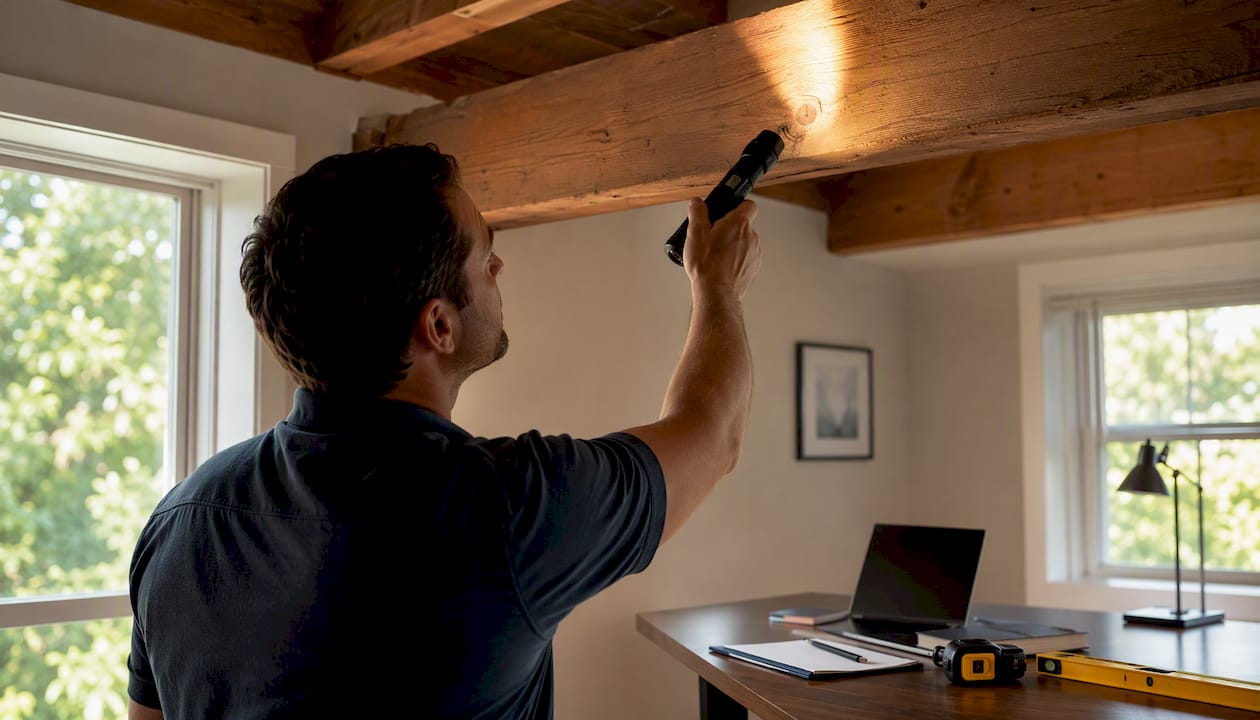
Licensed home inspector (call second). A general home inspection will flag unpermitted work and identify any visible safety concerns. Expect to pay $300–$500 for a standard inspection. The written report becomes part of your disclosure package.
Licensed contractor (call third, for cost estimates). Once you know what’s unpermitted, a licensed contractor can give you a written estimate for either retro-permit compliance or removal. Get at least two estimates for any significant scope of work.
Structural engineer (call if structural work is involved). If the unpermitted work touches load-bearing walls, the foundation, the roof structure, or any other structural element, a licensed structural engineer’s assessment is worth the cost — typically $500–$1,500 depending on scope. Their letter carries weight with lenders and buyers.
Real estate attorney (call before listing). A local real estate attorney can review your disclosure obligations under state law, advise on your liability exposure, and help you structure any holdback or credit arrangement in the purchase contract. An hour of attorney time is far less expensive than a post-sale lawsuit.
Cash buyer (call when speed matters). If the permit situation is complex, the timeline is tight, or the cost of remediation exceeds what makes financial sense, a cash buyer is a practical option. Cash buyers don’t require lender approval, don’t need the work to be permitted, and can move to closing in days rather than months.
Pro Tip: When vetting a contractor for retro-permit work, ask specifically whether they have experience closing out as-built permits in your municipality. The process varies by jurisdiction, and a contractor who has done it locally will know the inspectors, the common sticking points, and the realistic timeline.
What to have ready before each call:
- Permit history printout from the building department
- Photos of the unpermitted work (interior and exterior)
- Contractor invoices or any existing documentation
- Your property’s legal description and parcel number
A prioritized checklist to sell fast with unpermitted work
If your priority is speed, work through these steps in order. Each one either removes a barrier or gives you the information you need to make the next decision.
-
Pull your permit history. Go to your city or county building department’s online portal today. Print or save the results. This takes 15 minutes and costs nothing.
-
Photograph all unpermitted work. Clear, well-lit photos of every affected area — interior and exterior. Date the photos.
-
Order a focused inspection. A licensed home inspector can confirm which work appears unpermitted and flag any safety concerns. Schedule this within the first week.
-
Get a contractor estimate for retro-permit compliance. Even if you plan to sell as-is, knowing the cost of compliance gives you a negotiating anchor and helps you price the property accurately.
-
Decide on your path. Retro-permit if you have time and the cost is manageable. Price reduction or credit if you have a moderate timeline and a willing buyer pool. Cash sale if you need to close fast or the compliance cost is prohibitive.
-
If choosing a cash sale, gather these documents:
- Current deed or title information
- Permit history printout
- Contractor invoices and inspection report
- Utility account information (account numbers, providers)
- Keys and access codes
- Any HOA documents if applicable
-
Update your seller’s disclosure form to reflect everything you’ve found. Sign and date it.
-
Consult a real estate attorney for a disclosure review before you accept any offer.
On escrow holdbacks: If a buyer wants to proceed but is nervous about the permit situation, a holdback of an amount exceeding the estimated remediation cost is a common structure. The funds release when the permit is closed out or the agreed work is complete. This keeps the deal moving without requiring you to complete the work before closing.
Pro Tip: For a cash buyer, the single most useful thing you can provide upfront is a clear permit history printout and a set of dated photos. Those two items let a cash buyer assess the situation quickly and make a firm offer without a lengthy due diligence period.
What sellers in real situations actually face
The three scenarios below reflect the kinds of situations that come up repeatedly when homeowners need to sell a house with unpermitted work done.
The inherited property with an unpermitted addition. You’ve inherited a home and discovered the previous owner added a bedroom and bathroom without permits. You don’t have the contractor’s contact information, and you’re not sure what the work involved. The retro-permit route requires hiring an engineer, preparing as-built plans, and potentially opening walls. For most heirs in this situation, the combination of time pressure and unfamiliarity with the property makes a cash sale the most practical option. You avoid the permit process entirely, close on a timeline that works for you, and move on.
The foreclosure or financial hardship situation. You’re behind on payments and need to close before the bank acts. A retro-permit process that takes 3–6 months is not a realistic option. Listing on the open market and waiting for a financed buyer to clear underwriting adds more uncertainty. A cash buyer who can close in 7 days is often the only path that actually solves the problem.
The seller with time and significant equity. You have 6 months before you need to move, the unpermitted work is a finished basement, and a contractor estimates $8,000 to bring it into compliance. In this case, the retro-permit route likely makes financial sense. The permitted basement adds measurable value to the appraised square footage and expands your buyer pool to include FHA and conventional financing.
Signs that an as-is cash sale is likely your best option:
- The compliance cost exceeds what you’d recover in a higher sale price
- Your timeline is under 60 days
- The unpermitted work involves structural or major systems (electrical, plumbing, HVAC)
- You’ve already received a notice of violation from the building department
- The property has multiple unpermitted modifications
- You’re dealing with foreclosure, probate, or an inherited property you haven’t occupied
Sell Dave Your House buys as-is, permits and all
When the permit situation is complicated, the timeline is short, or the cost of remediation simply doesn’t pencil out, Sell Dave Your House offers a direct alternative to the traditional listing process. There are no repairs to make, no permits to pull, and no agent commissions to pay.

The process is straightforward: contact Sell Dave Your House, receive a fair cash offer within 24 hours, and close in as little as 7 days. Sell Dave covers standard closing costs, buys the property as-is regardless of permit history, and works with homeowners across Metro Detroit facing foreclosure, probate, inherited properties, or homes with significant deferred maintenance. If you’re in Warren, Westland, Waterford, or anywhere else in Metro Detroit, the same fast, no-hassle process applies.
The process works in three steps:
- Contact Sell Dave Your House with basic property details — condition, location, and your timeline.
- Receive a cash offer within 24 hours based on the property’s current condition, no repairs or permits required.
- Close on your schedule, as fast as 7 days, with standard closing costs covered.
To see how the cash sale process works or to request your offer, visit Sell Dave Your House online or call directly. If you need to move quickly, get a fair cash offer today and know your number before you commit to any other path.
Useful resources for sellers
These primary sources are worth bookmarking as you work through your permit situation.
- HUD Single-Family Housing Policy Handbook: The governing document for FHA loan property standards; useful if your buyer pool includes FHA-financed buyers and you need to understand what lenders will require.
- Local building department / permit office: Search “[your city or county] building permit records” to find your jurisdiction’s online portal. This is where you pull your permit history and, if you pursue a retro-permit, where you file your application.
- Nolo — Seller Disclosure Obligations: Plain-language overview of what happens when sellers fail to disclose known defects; useful for understanding your legal exposure before you list.
- Redfin — Buying a House With Unpermitted Additions: Covers buyer and seller remedies including retro-permits, credits, and escrow holdbacks; helpful for structuring negotiations.
- Sell Dave Your House — How Cash Sales Work: Step-by-step explanation of the as-is cash sale process for Metro Detroit homeowners who need to move quickly.
This article is general information, not a substitute for advice from a qualified lawyer. Consult a qualified legal professional about your own circumstances before acting on anything here.
Sources
- Hud
- Redfin — Buying a House With Unpermitted Additions
- Failure to Disclose Something to a Home Buyer: What Happens? | Nolo
- Do Appraisers Report Unpermitted Work to Authorities? - LegalClarity
FAQ
Do appraisers report unpermitted work to the city?
No. Appraisers send their reports to the lender, not the municipality. They document discrepancies between public records and observed improvements, which can prompt the lender to require corrective action, but appraisers do not directly report unpermitted work to local authorities.
How long are you liable for a house after you sell it?
Liability for nondisclosure typically runs with the state’s statute of limitations for real estate fraud or contract claims, which commonly ranges from 2 to 6 years from the date the buyer discovers the problem. Consulting a real estate attorney before closing is the most reliable way to understand your state’s specific window.
Can you sell a house with unpermitted work in Florida?
Yes. Florida sellers can sell a home with unpermitted work, but they must disclose it. Options include obtaining a retroactive permit, negotiating a price credit, or selling to a cash buyer who accepts the property as-is. Selling as-is does not exempt Florida sellers from disclosing known defects, and courts have held sellers liable for nondisclosure even in as-is transactions.
What is the penalty for unpermitted work?
Penalties vary by jurisdiction and can include fines, a notice of violation, a stop-work order, or a requirement to remove or rebuild the unpermitted work. In some municipalities, fines accumulate daily until the violation is resolved. Contacting your local building department directly is the only reliable way to know the specific penalties in your area.
Does Sell Dave Your House buy homes with unpermitted work?
Yes. Sell Dave Your House purchases Metro Detroit properties as-is, regardless of permit history, condition, or repair needs. Sellers receive a cash offer within 24 hours and can close in as little as 7 days, with no repairs, no agent commissions, and standard closing costs covered by Sell Dave.