
Types of Foundation Problems in Detroit Homes
TL;DR:
- Detroit homes face foundation issues caused by clay-rich soil that swells and shrinks seasonally. Early detection through twice-yearly inspections can prevent costly repairs and structural failure. Homes with foundation problems can be sold as-is through cash buyers, avoiding traditional repair requirements.
Detroit homes face foundation problems defined by one root cause: clay-rich soil that swells, shrinks, and traps water with every seasonal shift. The types of foundation problems in Detroit homes range from hydrostatic pressure damage and differential settlement to historic masonry deterioration and structural wall bowing. Each issue traces back to Southeast Michigan’s freeze-thaw cycles and the region’s dense clay soil, which behaves more like a sponge than stable ground. Knowing what you are dealing with is the first step toward protecting your home and making informed decisions about repair or sale.
1. Types of foundation problems in Detroit homes: hydrostatic pressure damage
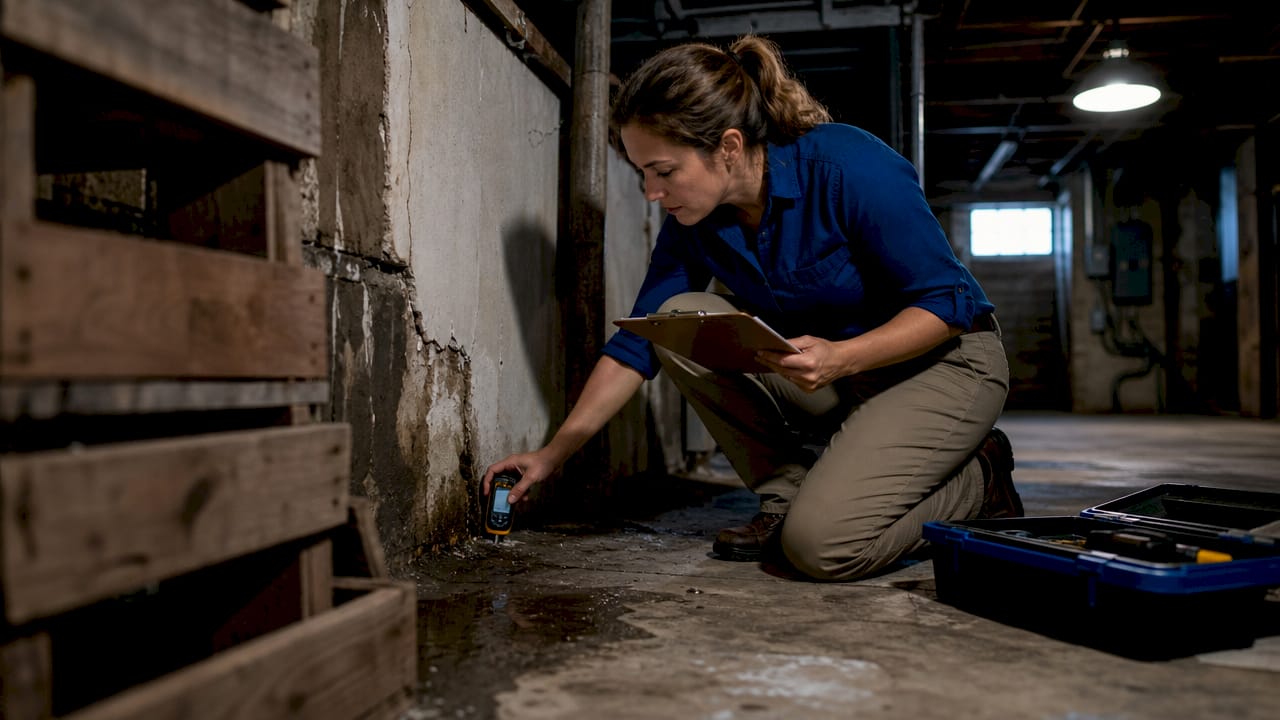
Hydrostatic pressure is the force water exerts against your foundation walls when saturated soil has nowhere to drain. Detroit’s clay soil creates what specialists call the “clay bowl” effect, where dense clay surrounds the foundation and traps water rather than letting it drain away naturally. That trapped water builds pressure against basement walls, and over time, the walls crack, bow inward, or leak.
Signs of hydrostatic pressure damage include:
- Horizontal cracks running along the middle third of basement walls
- Walls that visibly bow or lean inward
- Persistent dampness, seepage, or white mineral stains on concrete
- Musty odors that return even after cleaning
Standard repairs include carbon-fiber straps bonded to the wall surface, interior drainage systems that redirect water before it builds pressure, and exterior excavation in severe cases. Cosmetic crack sealing alone fails for horizontal cracks because the underlying pressure continues to push. Carbon-fiber reinforcement is the preferred fix because it stops further movement without requiring excavation.
Pro Tip: Extend your downspouts at least 5–10 feet from the foundation. Improper downspout drainage is the leading preventable cause of soil saturation and hydrostatic pressure damage in Detroit basements.
2. Differential settlement: uneven soil movement under your home
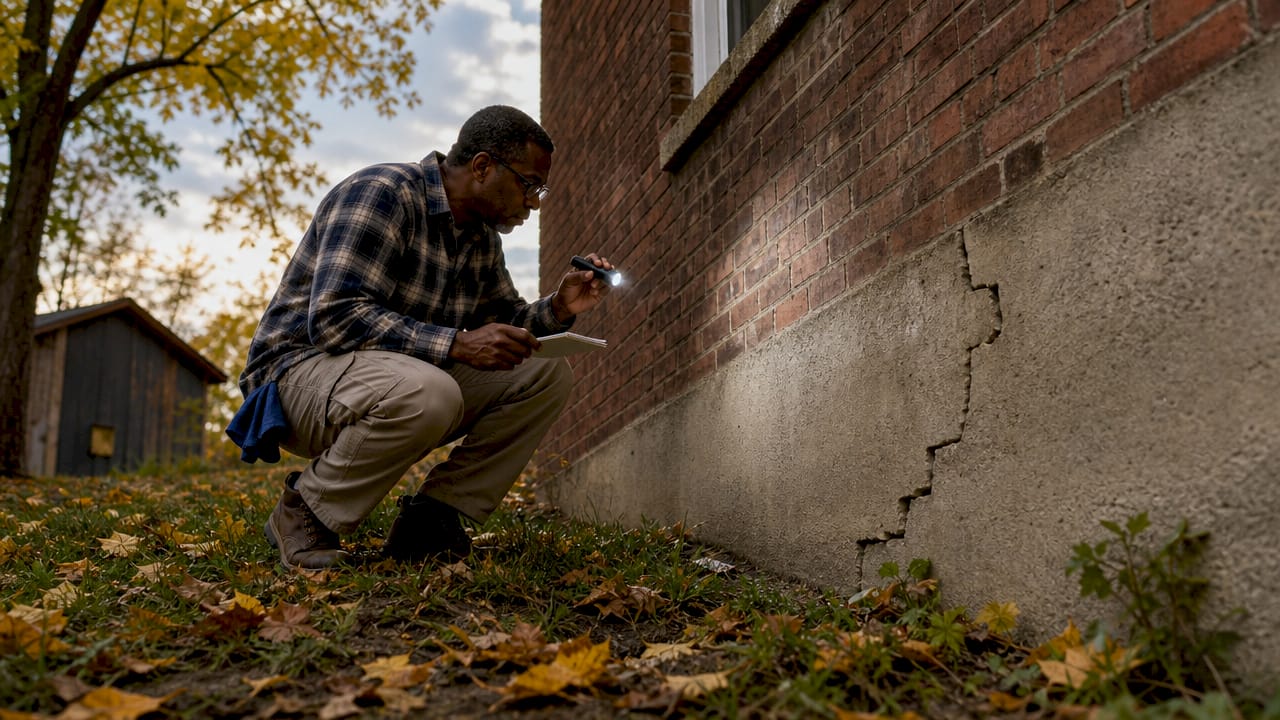
Differential settlement is defined as uneven sinking or shifting of a foundation caused by inconsistent soil conditions beneath the structure. Detroit’s clay soil expands when wet and contracts sharply during dry summers, creating a cycle of movement that pulls different parts of the foundation in different directions. The result is a home that no longer sits level.
Signs of differential settlement include:
- Stair-step cracks along mortar joints in brick or concrete block walls
- Doors and windows that stick, jam, or no longer close properly
- Visible gaps between walls and ceilings or floors
- Sloping or uneven floors inside the home
Differential settlement frequently appears as stair-step cracks along mortar joints and causes sticking doors and windows. Mild settlement may stabilize on its own if drainage improves, but severe settlement requires underpinning or pier installation to stabilize the footing.
| Severity level | Typical signs | Recommended action |
|---|---|---|
| Mild | Hairline stair-step cracks, minor door sticking | Monitor, improve drainage, inspect twice yearly |
| Moderate | Wider cracks, multiple sticking doors, visible gaps | Professional inspection, possible pier installation |
| Severe | Significant structural shift, large cracks, sloping floors | Immediate structural evaluation and underpinning |
Pro Tip: Schedule perimeter inspections twice yearly, once before spring rains and once after the summer dry spell. Early detection cuts repair costs significantly.
3. Masonry deterioration in older Detroit homes
Many Detroit homes built before 1950 sit on stone, fieldstone, or limestone-block foundations rather than poured concrete. These historic masonry foundations were built to last, but they have specific vulnerabilities that modern concrete walls do not share. About 30% of foundation service calls for older Detroit homes involve historic masonry needing maintenance.
The most common signs of masonry deterioration are:
- Efflorescence: white, chalky mineral deposits on the wall surface
- Spalling: chunks of brick or stone breaking away from the surface
- Crumbling or missing mortar between joints
- Visible moisture migration or staining on interior walls
Efflorescence signals active water migration through masonry. It is often mistaken for mold, but it actually indicates water carrying minerals through the wall and depositing them on the surface. Left unaddressed, that moisture compromises mortar joints and weakens the entire wall over time.
Repair methods for historic masonry focus on interior solutions. Tuckpointing replaces deteriorated mortar with fresh material, restoring the wall’s structural bond. Interior drain tile systems manage water that does migrate through the wall. Exterior excavation risks destabilizing the original footing on older masonry homes, so preservation-aware contractors avoid it unless absolutely necessary. Selecting a contractor with specific experience in Detroit’s historic housing stock is not optional. It is the difference between a repair that holds and one that causes new damage.
| Problem type | Masonry foundations | Modern concrete foundations |
|---|---|---|
| Primary water issue | Moisture migration through joints | Hydrostatic pressure cracking |
| Common repair | Tuckpointing, drain tile | Carbon-fiber straps, interior drainage |
| Excavation risk | High, can destabilize footing | Moderate, generally manageable |
| Specialist needed | Historic preservation contractor | Standard foundation contractor |
4. Structural bowing and wall deflection
Structural bowing is defined as inward deflection of a basement wall caused by sustained lateral pressure from soil and water. It is one of the most serious foundation issues you can find in a Detroit home because it signals that the wall is actively failing under load. Bowing walls exceeding 1 inch of inward deflection require immediate structural evaluation.
Signs that bowing has reached a critical stage include:
- A visible curve or lean in the basement wall
- Horizontal cracks at or near the midpoint of the wall
- Cracks that have widened over a short period
- Separation between the wall and the floor or ceiling
Standard stabilization uses carbon-fiber straps anchored to the floor and rim joist, which halt further movement without requiring excavation. Steel I-beam bracing is a heavier option used when deflection is more advanced. When a wall has moved beyond the point where straps can hold it, full excavation and wall reconstruction become necessary. That repair is significantly more expensive than early intervention.
Pro Tip: If you notice a crack in your basement wall that runs horizontally, do not wait. Horizontal cracks require reinforcement like carbon-fiber strips to prevent reopening or worsening. A professional evaluation scheduled within days, not months, can save you from a far larger repair bill.
5. Preventative maintenance: what Detroit homeowners can do now
Routine inspection is the most cost-effective foundation strategy available to you. Most serious foundation damage in Detroit homes did not appear overnight. It developed over years of undetected moisture, ignored cracks, and deferred maintenance. Catching problems early keeps repairs manageable.
- Inspect the perimeter twice a year. Walk the exterior of your home in spring and again in late summer. Look for new cracks in the foundation wall, gaps between the foundation and siding, and soil that has pulled away from the wall.
- Check your basement walls and floor. Look for horizontal or stair-step cracks, bowing, efflorescence, and any signs of moisture or seepage after rain.
- Test your doors and windows. Sticking or misaligned doors and windows often signal foundation movement before visible cracks appear.
- Manage your roof drainage. Clean gutters regularly and confirm downspouts direct water 5–10 feet away from the foundation. Water directed away from the foundation reduces hydrostatic pressure significantly.
- Check your grading. The soil around your home should slope away from the foundation at a rate of about 1 inch per foot for the first 6 feet. Flat or inward-sloping grade channels water directly toward your walls.
- Note any new odors. A persistent musty smell in the basement often indicates moisture intrusion before visible water appears.
- Call a professional when in doubt. Regular homeowner inspections help with early detection, but a licensed structural engineer or foundation specialist can identify problems that are not visible to the untrained eye.
Key Takeaways
Detroit foundation problems are driven by clay soil and freeze-thaw cycles, and early detection through twice-yearly inspections is the most reliable way to reduce repair costs and prevent structural failure.
| Point | Details |
|---|---|
| Clay soil is the root cause | Detroit’s clay-rich soil swells, shrinks, and traps water, creating pressure and movement under every home. |
| Hydrostatic pressure needs reinforcement | Horizontal cracks require carbon-fiber straps, not cosmetic sealing, to stop further wall movement. |
| Historic masonry needs specialist care | Older stone and limestone-block foundations require preservation-aware contractors; exterior excavation can cause new damage. |
| Bowing walls have a critical threshold | Inward deflection beyond 1 inch requires immediate professional evaluation to avoid collapse risk. |
| Inspect twice yearly | Schedule perimeter checks before spring rains and after summer dry spells to catch problems before they escalate. |
What I’ve learned working with Detroit foundations
After years of working with Detroit homeowners, the misconception I encounter most often is that foundation cracks are a cosmetic problem. Homeowners patch a crack with hydraulic cement, feel relieved, and move on. Six months later, the crack is back and wider. The clay soil underneath never stopped moving.
The other pattern I see regularly is homeowners who underestimate how much the local soil behavior matters when selecting a contractor. Detroit’s housing stock is genuinely different from newer suburban construction. A contractor experienced in poured concrete repairs may have no idea how to handle a fieldstone foundation from 1912 without making things worse. Proper contractor expertise in older Detroit homes is critical because the foundation types, stone, fieldstone, and limestone-block, require a completely different approach.
My honest observation for 2026 is that Detroit homeowners are facing more frequent foundation stress events because of increasingly variable weather patterns. Wetter springs followed by drier summers accelerate the swell-and-shrink cycle that drives differential settlement. That means the twice-yearly inspection schedule is not just good practice. It is becoming a necessity.
If you are unsure whether a crack is structural or cosmetic, get a professional opinion before you spend money on a repair. The cost of an inspection is a fraction of the cost of fixing a problem that was misdiagnosed. Proactive attention to your foundation protects your home’s value and your family’s safety.
— Real Estate Team
Selling a Detroit home with foundation issues
Foundation problems do not have to mean a dead-end sale. Many Detroit homeowners discover foundation damage and assume they have no good options, especially when repair costs are high and traditional buyers walk away after inspections.

Sell Dave Your House buys Detroit homes as-is, including properties with foundation issues, bowing walls, water damage, and historic masonry problems. There are no repair requirements, no agent commissions, and no drawn-out closing timelines. With over 16 years of experience in the Detroit market, Sell Dave Your House provides a fair cash offer within 24 hours and can close in as little as seven days. If you are weighing the cost of foundation repairs against the value of a fast, certain sale, learn how cash sales work and see whether it fits your situation. You can also review homes with foundation issues to understand what a cash offer process looks like for your specific circumstances.
FAQ
What causes most foundation problems in Detroit?
Heavy clay-rich soil and freeze-thaw cycles are the primary drivers of foundation problems in Detroit homes. The clay expands when wet, contracts when dry, and traps water against foundation walls, creating persistent pressure and movement.
How do I know if my foundation crack is serious?
Horizontal cracks and cracks wider than a quarter inch are serious and require professional evaluation. Stair-step cracks along mortar joints and cracks that grow over time also signal structural movement rather than normal settling.
How often should I inspect my Detroit home’s foundation?
Inspect your foundation at least twice yearly, once before spring rains and once after the summer dry season. These are the periods when soil moisture changes most dramatically and new damage is most likely to appear.
Can I sell my Detroit home if it has foundation problems?
Yes. Cash buyers like Sell Dave Your House purchase homes with foundation issues as-is, with no repair requirements. Traditional buyers and lenders often require repairs before closing, but a cash sale bypasses that process entirely.
What is efflorescence and should I be concerned?
Efflorescence is a white, chalky deposit that forms on masonry walls when water carries minerals through the wall and deposits them on the surface. It signals active moisture migration and should be monitored, as it indicates ongoing water intrusion that can weaken mortar joints over time.