

Why Selling As-Is Saves Estate Costs
TL;DR:
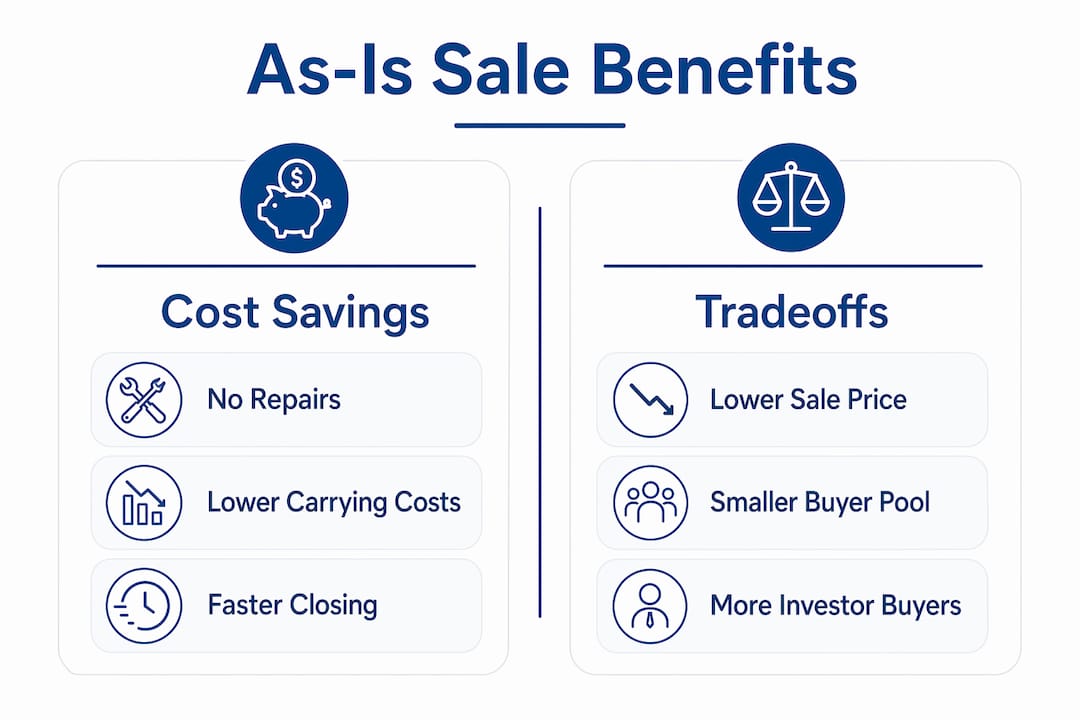
- Selling a property as-is saves estate owners from repair costs, shortens the selling timeline, and reduces ongoing expenses. Buyers discount these properties 15 to 25 percent due to repair and risk considerations, but avoided costs often offset the lower sale price. Selling as-is benefits estates with multiple heirs, limited cash, or structural damage by enabling faster, simpler transactions that maximize net proceeds.
Selling a property as-is is defined as transferring ownership without completing repairs, renovations, or cosmetic updates before closing. This approach directly answers why selling as-is saves estate costs: it eliminates upfront renovation expenses, cuts ongoing carrying costs, and speeds up the closing timeline. Estates facing probate, multiple heirs, or limited cash reserves benefit most from this method. While buyers typically apply a 15–25% price discount on as-is properties, the avoided renovation and holding costs often offset that reduction. Sell Dave Your House has helped Detroit-area homeowners navigate exactly this trade-off for over 16 years.
How does selling as-is reduce upfront costs for estate sellers?
Avoiding renovations saves estate sellers from $10,000 to $50,000 or more in repair and project management expenses. That range covers everything from a new roof and updated electrical panels to plumbing replacements and foundation work. Each of those projects also requires contractor coordination, permits, and inspections, which add weeks or months to the timeline.
The most commonly avoided repairs in estate sales include:
- Roof replacement: Typically $8,000–$15,000 and often flagged during buyer inspections
- Plumbing updates: Older homes frequently need repiping, which runs $5,000–$15,000
- Electrical upgrades: Bringing a panel up to code can cost $3,000–$10,000
- Foundation repairs: Structural issues can reach $30,000 to $100,000 or more, rarely recouping full value at sale
- Mold and water damage remediation: Costs vary widely but routinely exceed $10,000
For heirs and executors managing an estate, the burden goes beyond money. Coordinating contractors while handling probate paperwork, family decisions, and legal filings creates real stress. Selling inherited property as-is removes that layer of complexity entirely.
Pro Tip: Before committing to any repair, get three contractor quotes and compare the total cost against the realistic price increase it would generate. Many estate sellers find the math does not justify the work.

What happens to sale price when you sell as-is?
Buyers discount as-is properties based on estimated repair costs plus a risk premium. The risk premium reflects the uncertainty of unknown problems discovered after purchase. That calculation typically produces offers 15–25% below what a move-in-ready comparable home would fetch.
The buyer pool for as-is properties skews heavily toward real estate investors and house flippers. These buyers factor repair costs directly into their offers and rarely pay above a calculated ceiling. Conventional mortgage financing is also harder to obtain on as-is properties, which limits the pool of retail buyers who can compete.
| Scenario | Estimated sale price | Renovation cost | Net proceeds |
|---|---|---|---|
| Renovated sale | $200,000 | $40,000 | $160,000 |
| As-is sale (20% discount) | $160,000 | $0 | $160,000 |
| As-is sale (15% discount) | $170,000 | $0 | $170,000 |
The table above shows a realistic outcome: when renovation costs are high, the net proceeds from an as-is sale can match or exceed a renovated sale. Realtor commissions and closing costs consume an additional 7–11% on traditional sales, a cost that many cash as-is transactions avoid entirely. That further narrows the gap between the two approaches.
Pro Tip: Ask a real estate professional to run a net proceeds analysis for both paths before deciding. The difference is often smaller than sellers expect, especially when major repairs are involved.
How does selling as-is cut ongoing carrying costs?
Carrying costs accumulate every month a property sits unsold or under renovation. These include property taxes, homeowner’s insurance, utilities, and basic maintenance. Carrying costs can add $5,000 to $15,000 over just two to three months of holding time.
For estate properties in probate, the timeline stretches further. Renovation projects routinely take two to six months to complete, and the listing period adds more time on top of that. Each passing month drains the estate’s cash reserves before a single dollar reaches the heirs.
Selling as-is shortens that exposure significantly. Here is how the timeline compares:
- Traditional renovated sale: Two to six months of renovation, followed by 30–90 days on the market, then a 30–45 day closing period. Total: four to twelve months.
- As-is listing with retail buyers: No renovation period, but financing contingencies and inspections still add 30–60 days to close.
- As-is cash sale: Closing often takes two to four weeks from accepted offer to funded transaction, cutting carrying costs to a minimum.
For an estate paying $2,000 per month in taxes, insurance, and utilities, a six-month renovation and listing process costs $12,000 before the property even sells. An as-is cash sale eliminates most of that expense.
When is selling as-is the best choice for an estate property?
Certain situations make the as-is path clearly the better financial decision. Probate and inherited properties benefit most because they often involve multiple heirs, out-of-state executors, and limited estate cash to fund repairs.
The following conditions strongly favor an as-is sale:
- Multiple heirs with differing opinions: Agreeing on renovation scope and spending is difficult. An as-is sale produces a clean cash split with no ongoing decisions required.
- Out-of-state executors: Managing contractors remotely adds cost and risk. Selling as-is removes that management burden entirely.
- Limited estate liquidity: When the estate has no cash to fund repairs, borrowing to renovate adds debt and interest costs that reduce net proceeds further.
- Major structural damage: Foundation problems, severe water damage, or mold issues can cost $30,000 to $100,000 or more to fix, and the sale price rarely increases enough to cover those costs.
- Tight distribution timelines: When heirs need funds quickly, a fast cash sale resolves the estate faster than a months-long renovation and listing process.
As-is sales reduce multi-beneficiary disputes and speed estate distribution, which is a benefit that goes beyond dollars. Fewer decisions mean fewer conflicts, and a faster close means heirs can move forward with their lives sooner.
Renovating versus selling as-is: how do you decide?
Minor cosmetic repairs often yield strong returns, but major structural repairs rarely offset their costs in an estate sale context. A fresh coat of paint, cleaned carpets, and a landscaped yard can improve buyer perception without significant expense. A full kitchen remodel or foundation repair is a different calculation entirely.
| Factor | Renovate first | Sell as-is |
|---|---|---|
| Repair cost | $10,000–$50,000+ | $0 |
| Time to close | 4–12 months | 2–6 weeks (cash) |
| Carrying costs | $5,000–$15,000+ | Minimal |
| Buyer pool | Broader retail buyers | Investors and cash buyers |
| Net proceeds | Potentially higher | Often comparable after costs |
Consulting a real estate professional before committing to either path gives you a realistic picture of what repairs will actually return in your specific market. A full cost-benefit comparison should include renovation costs, carrying costs, project management time, and the realistic sale price increase. Many sellers who run those numbers find the as-is path produces comparable or better net proceeds, especially when the property needs significant work. Understanding why homeowners sell fast can also clarify whether speed or maximum price is the right priority for your situation.
Key Takeaways
Selling as-is saves estate costs by eliminating renovation expenses, cutting carrying costs, and closing faster, making net proceeds often comparable to a renovated sale.
| Point | Details |
|---|---|
| Renovation costs avoided | As-is sales skip $10,000–$50,000+ in repairs, keeping estate cash intact. |
| Carrying cost savings | Faster closings eliminate $5,000–$15,000 in taxes, insurance, and utilities. |
| Price discount is real but manageable | Buyers discount 15–25%, but avoided costs often close the gap in net proceeds. |
| Best for complex estates | Multiple heirs, probate, and out-of-state executors benefit most from as-is sales. |
| Professional analysis matters | A net proceeds comparison with a real estate professional guides the right decision. |
What I’ve learned after years of watching estate sellers choose as-is
The most common misconception I see is that accepting a lower sale price means losing money. That framing ignores the full picture. When you add up renovation costs, carrying costs, agent commissions, and the months of stress involved in managing a property through repairs and listing, the as-is path frequently produces a better financial outcome, not a worse one.
What surprises sellers most is the emotional cost of renovating an inherited home. Heirs are often managing grief, family dynamics, and legal obligations simultaneously. Adding contractor disputes and renovation delays to that load is genuinely harmful. An as-is sale removes a significant source of friction at a time when people need simplicity.
The sellers who struggle with the as-is decision are usually those who fixate on the gross sale price rather than the net proceeds. A $200,000 renovated sale after $45,000 in repairs, $12,000 in carrying costs, and $14,000 in commissions nets $129,000. An as-is cash sale at $165,000 with no repairs and minimal fees nets significantly more. The math speaks clearly once you lay it out.
My honest advice: get the numbers on paper before you decide. A home sale proceeds plan that accounts for every cost category will show you which path actually puts more money in your hands. Most estate sellers who do that analysis choose as-is without hesitation.
— Real Estate Team
How Sell Dave Your House helps estate sellers close fast
Sell Dave Your House works directly with heirs, executors, and homeowners who need to sell estate properties without the burden of repairs or lengthy timelines.

The process starts with a fair all-cash offer within 24 hours of contact, with no repairs required and no agent commissions deducted. Closing can happen in as little as seven days, which eliminates months of carrying costs and removes the stress of managing a property through probate. Sell Dave Your House has over 16 years of experience helping Detroit-area homeowners in exactly these situations. Whether you are dealing with an inherited property, a tight financial timeline, or a home that needs significant work, the team provides a straightforward path to closing. You can also sell your house fast for cash without navigating the traditional listing process at all.
FAQ
What does selling as-is mean in real estate?
Selling as-is means the seller transfers ownership without making repairs or improvements before closing. The buyer accepts the property in its current condition, including any known or unknown defects.
How much less do you get when you sell a house as-is?
As-is properties typically sell for 15–25% below comparable move-in-ready homes. The actual discount depends on the property’s condition, local market demand, and the buyer’s estimated repair costs.
Is selling as-is worth it for an inherited property?
For most inherited properties, selling as-is is worth it because it avoids renovation costs, reduces carrying costs, and speeds estate distribution. The net proceeds are often comparable to a renovated sale once all expenses are factored in.
Who buys as-is properties?
Real estate investors, house flippers, and cash buyers make up the primary market for as-is properties. These buyers factor repair costs into their offers and can close quickly without financing contingencies.
How fast can you close on an as-is cash sale?
Cash buyers can typically close in two to four weeks, compared to four to twelve months for a renovated traditional sale. That speed directly reduces carrying costs and accelerates estate settlement.